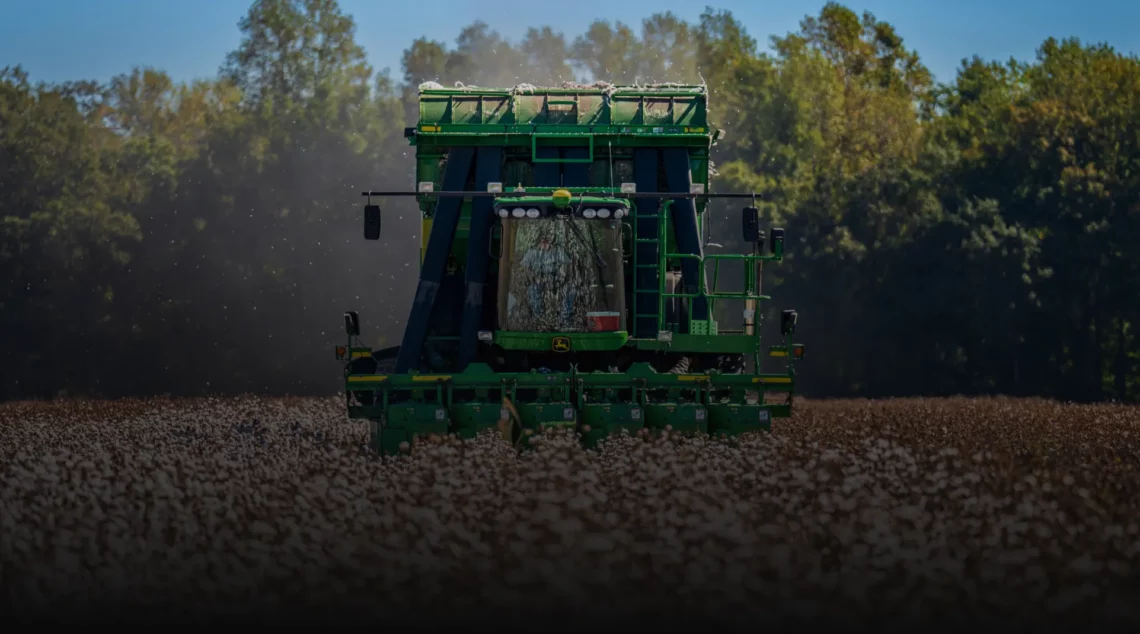
Agricultural roller chain maintenance is especially important during harvest season, when equipment operates for long hours under heavy loads and demanding conditions.Why Agricultural Roller Chain Maintenance Matters During Harvest
Long workdays, heavy loads, dust, crop residue, and continuous operation can all increase the demands placed on mechanical components. And when equipment is needed every day, an unexpected failure can quickly become a costly interruption.
Roller chains are used in many types of agricultural and material-handling equipment to transmit power and move components. Keeping them properly inspected, lubricated, and adjusted can help reduce premature wear and identify problems before they interrupt operations.
Here are some of the most important roller chain maintenance checks to make during harvest season.
Why Agricultural Roller Chain Maintenance Matters During Harvest
Agricultural roller chains often operate under conditions very different from those found inside controlled industrial environments.
Depending on the equipment, chains may be exposed to:
- Dust
- Dirt
- Crop residue
- Moisture
- Repeated heavy loads
- Long operating hours
- Outdoor temperature changes
Contamination can interfere with lubrication, while heavy loads and long operating cycles can accelerate wear.
For that reason, maintenance becomes particularly important when equipment is being used intensively.
Where Are Roller Chains Used in Agricultural Equipment?
Roller chains and related drive chains can be found in many agricultural systems, although the exact chain type varies by machine and manufacturer.
Potential applications include:
- Harvesting equipment
- Conveyors
- Grain handling systems
- Feed systems
- Elevators
- Agricultural processing equipment
- Farm machinery
- Material handling systems
Always refer to the equipment manufacturer’s specifications before selecting a replacement chain.
5 Roller Chain Checks to Make During Harvest
A visual inspection can reveal many common chain problems before they become failures.
These five areas deserve particular attention.
1. Check Chain Lubrication
Proper lubrication is one of the most important factors affecting roller chain service life.
Lubricant needs to reach the areas where pins, bushings, and rollers interact. Without adequate lubrication, friction and wear can increase significantly.
During periods of heavy equipment use:
- Inspect lubrication more frequently
- Follow the equipment manufacturer’s recommended lubricant
- Look for dry or stiff chain sections
- Watch for excessive dirt accumulation around lubricated areas
More lubricant isn’t necessarily better. The goal is correct and consistent lubrication for the operating environment.
2. Inspect Chain Tension
A roller chain that is too loose or too tight can create problems.
Excessive slack may cause poor engagement with the sprockets, vibration, or chain movement outside its intended path.
Excessive tension can place additional load on the chain, bearings, shafts, and sprockets.
Check chain tension according to the equipment manufacturer’s recommendations and adjust it when necessary.
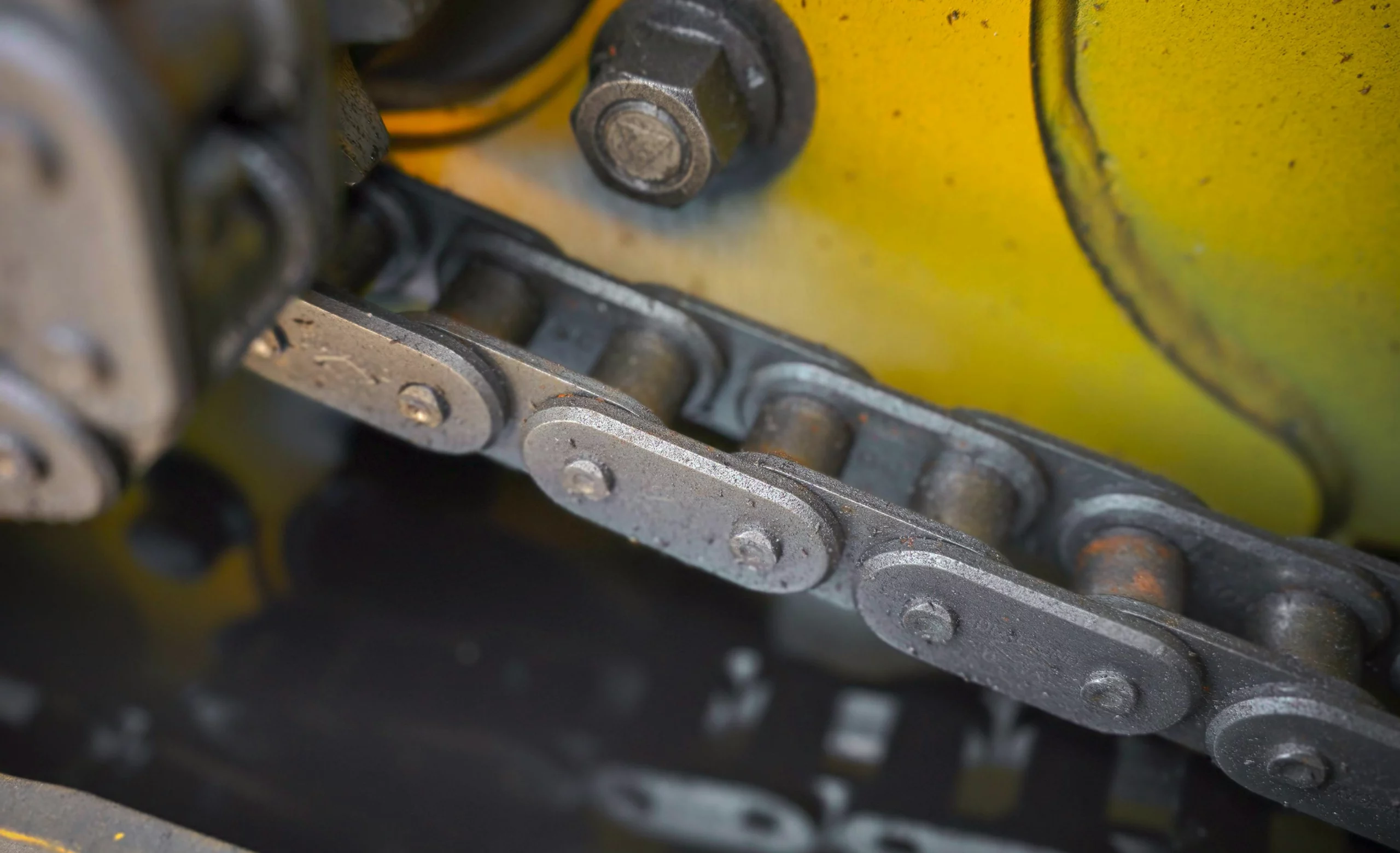
3. Look for Chain Wear and Elongation
Roller chains don’t normally “stretch” because the metal side plates become longer.
Instead, wear occurs primarily around the pins and bushings, gradually increasing the distance between chain pitches. This is commonly referred to as chain elongation.
As elongation increases, the chain may no longer engage properly with the sprocket.
Regular measurement can help maintenance teams determine when the chain has reached its allowable wear limit.
4. Inspect the Sprockets
Replacing a worn chain without inspecting the sprockets can lead to additional problems.
Look for:
- Hooked sprocket teeth
- Uneven tooth wear
- Broken or damaged teeth
- Misalignment
- Abnormal chain engagement
As a result, a badly worn sprocket can accelerate wear on a new roller chain.
The chain and sprockets should therefore be considered as part of the same drive system.
5. Remove Dirt and Debris
Agricultural environments can expose chains to significant amounts of dirt and crop material.
Contamination can interfere with lubrication and contribute to abrasive wear.
Inspect the chain regularly and follow appropriate cleaning procedures for the equipment and chain type.
This is particularly important during intensive periods when machinery may operate for many hours between scheduled maintenance stops.
When Should an Agricultural Roller Chain Be Replaced?
Waiting for a roller chain to break is rarely a good maintenance strategy.
Instead, look for signs that indicate the chain is approaching the end of its useful service life.
These can include:
- Excessive elongation
- Stiff or seized links
- Damaged rollers
- Visible corrosion
- Cracked or damaged components
- Frequent tension adjustments
- Poor engagement with sprockets
- Unusual noise or vibration
Replacement criteria depend on the chain, equipment, and application, so always follow the manufacturer’s allowable wear limits.
Standard vs. Heavy-Duty Roller Chains for Agricultural Equipment
Not every agricultural application requires the same roller chain.
A standard carbon steel roller chain may be appropriate for many general power-transmission applications.
A heavy–duty roller chain, on the other hand, may be considered for applications involving higher shock loads or demanding operating conditions when the equipment specifications allow it.
PGN offers both standard and heavy-duty roller chain options across multiple ANSI sizes.
However, the important point is not simply to choose the strongest chain available. The replacement chain needs to match the pitch, dimensions, sprockets, load requirements, and equipment specifications.
Don’t Forget Connecting Links
Connecting links may be small, but they’re an essential part of many roller chain installations.
A worn, damaged, or incorrectly installed connecting link can compromise the entire chain assembly.
When inspecting the chain, check connecting links for:
- Visible wear
- Damage
- Proper installation
- Correct fit
- Corrosion
Always use a connecting link that matches the chain size and specification.
A Simple Harvest-Season Roller Chain Checklist
Before operating agricultural equipment, or during scheduled maintenance, ask:
Is the chain properly lubricated?
Is the tension within specification?
Is there excessive chain elongation?
Are all rollers and links moving freely?
Are the sprockets in good condition?
Is the drive properly aligned?
Is there excessive dirt or contamination?
Are connecting links secure and undamaged?
A few minutes of inspection can reveal developing problems before they become more serious.
Reduce Downtime by Planning Maintenance Before Failure
During harvest season, the best time to discover a worn chain isn’t after it breaks.
Monitoring chain condition throughout periods of heavy use allows maintenance teams and equipment owners to schedule replacement before a component reaches failure.
It can also help protect related components such as sprockets, bearings, and shafts from damage caused by a poorly maintained chain drive.
Consistent agricultural roller chain maintenance can help identify wear early and reduce avoidable downtime during harvest season.
Preventive maintenance won’t eliminate every equipment problem, but it can make failures more predictable and easier to manage.
Explore PGN Roller Chains
PGN offers a broad selection of roller chains for industrial, agricultural, and power-transmission applications, including standard carbon steel, heavy-duty, stainless steel, and specialty chain configurations, along with connecting links and other chain components.
When selecting a replacement, always confirm the required chain size and specifications for your equipment.
Explore PGN Roller Chains and find the right chain for your application.