Chrome vs. Stainless vs. Carbon Steel Balls: Key Differences
Not all steel balls are created equal.
Although chrome steel, stainless steel, and carbon steel balls may look similar, their material properties can make a significant difference in performance, durability, corrosion resistance, and cost.
For engineers, manufacturers, and industrial buyers, choosing the right material is just as important as selecting the correct diameter or precision grade.
A steel ball used in a high-load bearing assembly may require different characteristics than one used in a valve, mechanical mechanism, or moisture-exposed environment.
So, what’s the difference between chrome steel, stainless steel, and carbon steel balls?
This guide compares their main characteristics, common applications, and selection criteria to help you choose the right option.
Why Does Steel Ball Material Matter?
Steel balls are used in many mechanical and industrial applications, including bearings, valves, machinery, and precision assemblies.
Depending on the application, they may need to withstand:
- Repeated contact loads
- Friction and wear
- Moisture and corrosion
- Impact
- Temperature changes
- Tight dimensional tolerances
No single material performs best in every environment.
For example, a material with excellent hardness and wear resistance may be vulnerable to corrosion. Another material may provide better corrosion resistance but have different load-bearing or wear characteristics.
Understanding these trade-offs is essential for selecting the appropriate steel ball.
Chrome Steel Balls: High Hardness and Wear Resistance
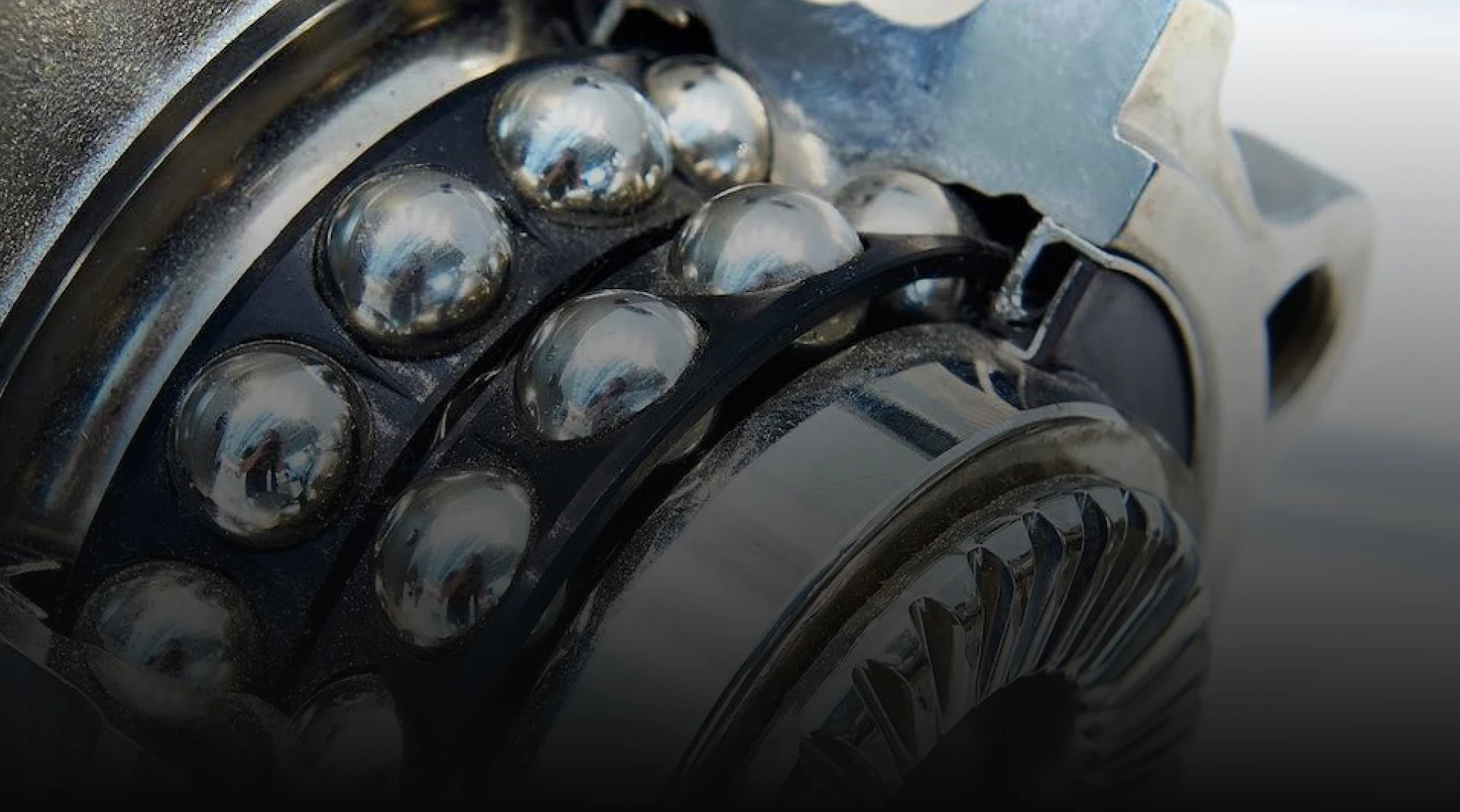
Chrome steel balls are widely used in precision bearings and mechanical applications where hardness and wear resistance are important.
One of the most common materials is AISI 52100 chrome steel, a high-carbon chromium bearing steel.
After appropriate heat treatment, this material provides high hardness and good resistance to rolling-contact fatigue.
Main Advantages of Chrome Steel Balls
- High hardness
- Excellent wear resistance
- Good performance under repeated contact loads
- Suitable for many precision bearing applications
- Consistent mechanical properties when properly manufactured
Common Applications
Chrome steel balls are commonly used in:
- Ball bearings
- Industrial machinery
- Mechanical assemblies
- Motion-control components
- Precision mechanisms
- Selected grinding and material-processing applications
What Are the Limitations?
Despite their mechanical advantages, standard chrome steel balls are not inherently corrosion-resistant.
Exposure to moisture, chemicals, or outdoor conditions may lead to rust unless suitable protection is provided.
Best suited for: Applications requiring high hardness, wear resistance, and precise mechanical performance in environments where corrosion can be controlled.
Stainless Steel Balls: Better Corrosion Resistance
Stainless steel balls are often selected for applications where resistance to moisture and corrosion is important.
However, not all stainless steel balls have the same properties.
Different stainless steel grades offer different combinations of hardness, corrosion resistance, and mechanical performance.
PGN carries stainless steel precision balls made from materials including AISI 440C and AISI 420.
Main Advantages of Stainless Steel Balls
- Better corrosion resistance than conventional chrome or carbon steel in many environments
- Suitable for certain moisture-exposed applications
- Available in different hardness and precision grades
- Useful in a variety of mechanical and industrial assemblies
AISI 440C vs. AISI 420 Stainless Steel Balls
AISI 440C is a hardenable stainless steel commonly used where both corrosion resistance and relatively high hardness are required.
AISI 420 is another hardenable stainless steel that can provide useful corrosion resistance and mechanical properties, depending on its heat treatment.
Neither material is universally superior. The appropriate choice depends on the application, required hardness, environmental exposure, and operating conditions.
Common Applications
Stainless steel balls may be used in:
- Valves
- Pumps
- Mechanical assemblies
- Outdoor equipment
- Moisture-exposed components
- Selected processing equipment
- Corrosion-sensitive mechanisms
For applications involving food contact, medical devices, or regulated industries, material selection must also account for applicable standards and certifications.
What Are the Limitations?
Stainless steel is generally more expensive than conventional carbon steel.
It is also important to remember that stainless steel is corrosion-resistant, not corrosion-proof.
Exposure to certain chemicals, chlorides, or harsh operating conditions can still cause corrosion.
Best suited for: Applications where moisture exposure or corrosion resistance is an important selection factor.
Carbon Steel Balls: A Cost-Effective Option for General Applications
Carbon steel balls are another common choice for mechanical and industrial applications.
Their properties depend on carbon content, manufacturing process, and heat treatment.
Compared with chrome steel or stainless steel, carbon steel may offer a more economical solution when the application does not require specialized corrosion resistance or high bearing-grade performance.
Main Advantages of Carbon Steel Balls
- Often more economical
- Available in multiple sizes
- Suitable for many general mechanical applications
- Different hardness options depending on material and processing
- Useful for cost-sensitive projects
Common Applications
Carbon steel balls may be used in:
- General mechanical assemblies
- Industrial mechanisms
- Selected valves and hardware
- Mechanical positioning devices
- Low- to moderate-demand applications, depending on specifications
- Prototyping and manufacturing processes
What Are the Limitations?
Conventional carbon steel is susceptible to rust when exposed to moisture.
Its hardness and wear resistance also vary considerably depending on the alloy and heat treatment.
For this reason, carbon steel balls should not automatically be considered interchangeable with hardened chrome steel bearing balls.
Best suited for: General mechanical applications where cost matters and the required mechanical properties can be met without specialized corrosion resistance.
Chrome Steel vs. Stainless Steel vs. Carbon Steel: Quick Comparison
The following table summarizes the main differences between these materials.
| Feature | Chrome Steel | Stainless Steel | Carbon Steel |
| Common materials | AISI 52100 | AISI 440C, 420 | Various carbon steel grades |
| Hardness | Typically high when hardened | Varies by alloy and heat treatment | Varies by grade and treatment |
| Wear resistance | Excellent in suitable applications | Good to high, depending on alloy | Application-dependent |
| Corrosion resistance | Low without protection | Generally better | Low without protection |
| Relative cost | Moderate | Often higher | Often lower |
| Common uses | Bearings, precision mechanisms | Valves, pumps, exposed mechanisms | General mechanical components |
| Key advantage | Hardness and contact-fatigue performance | Corrosion resistance | Cost and versatility |
Note: These comparisons describe general material characteristics. Actual performance depends on alloy composition, heat treatment, manufacturing quality, and operating conditions.
Which Steel Ball Material Is Best for Your Application?
The right material depends on what the ball needs to do.
Here are four common selection scenarios.
For High-Load Bearings and Precision Motion
Chrome steel balls are often a strong choice for bearing applications requiring high hardness, wear resistance, and repeated rolling contact.
However, the selected balls must also meet the required precision grade, size, and material specifications.
For Humid or Corrosion-Prone Environments
Stainless steel balls may be preferable when moisture or corrosion exposure is a concern.
The specific stainless steel alloy should be selected based on the environment, since corrosion resistance varies between grades.
For General Mechanical Applications
Carbon steel balls may offer a practical solution when the operating environment is relatively dry and the mechanical requirements are compatible with the material.
For Cost-Sensitive Projects
Carbon steel can be worth considering when price is an important factor.
However, selecting a less expensive material that does not meet the application’s requirements may lead to premature wear or replacement costs.
The goal should be to find the most economical material that still satisfies the necessary performance specifications.
Why Precision Grade Matters Too
Material is only one part of selecting the correct precision ball.
Another important specification is the precision grade.
Steel ball grades describe dimensional and geometric precision, including characteristics such as diameter variation and spherical accuracy.
Common grades include:
- G25
- G40
- G100
- G500
In general, a lower grade number indicates tighter dimensional and geometric tolerances.
For example, a G25 ball is manufactured to tighter precision requirements than a G100 or G500 ball under the applicable grading standard.
However, a lower grade number does not automatically mean that the ball is stronger, harder, or more corrosion-resistant.
Those characteristics depend primarily on material properties and manufacturing processes.
Does Every Application Need G25?
Not necessarily.
Some precision assemblies require tight tolerances, while other mechanical applications can operate effectively with less demanding grades.
Choosing a grade tighter than necessary may increase costs without providing a meaningful performance advantage.
Always match the precision grade to the engineering requirements of the application.
Five Questions to Ask Before Buying Precision Steel Balls
Before choosing between chrome steel, stainless steel, and carbon steel, consider the following questions.
1. What environment will the ball operate in?
Will it be exposed to moisture, chemicals, outdoor conditions, or a controlled indoor environment?
2. What loads will it experience?
Consider whether the application involves continuous rolling contact, static loading, impact, or another type of mechanical stress.
3. What precision grade is required?
Determine the dimensional and geometric tolerances needed for the assembly.
4. What size is required?
Check the exact diameter and whether the specification uses imperial or metric measurements.
5. What material properties are most important?
Prioritize the properties that matter most, such as hardness, corrosion resistance, wear resistance, or cost.
Answering these questions can help narrow the selection before comparing individual products.
Explore PGN Precision Steel Balls
PGN offers a broad selection of precision steel balls for mechanical and industrial applications.
Our product range includes:
- Chrome steel balls: Options manufactured from AISI 52100 for applications requiring hardness and wear resistance.
- Stainless steel balls: Options including AISI 440C and AISI 420 for applications where corrosion resistance is important.
- Carbon steel balls: Options for general mechanical and industrial applications.
Available precision grades include G25, G40, G100, and G500, with a variety of metric and imperial sizes.
Whether you’re sourcing steel balls for a precision mechanism, manufacturing process, or general mechanical application, choosing the correct material and grade is essential.
Explore PGN Precision Steel Balls to compare available materials, sizes, and grades.
Frequently Asked Questions About Steel Ball Materials
Are chrome steel balls better than stainless steel balls?
Neither is universally better. Chrome steel is often preferred for demanding rolling-contact applications requiring high hardness and wear resistance, while stainless steel may be more suitable when corrosion resistance is important.
Do stainless steel balls rust?
Stainless steel is more corrosion-resistant than conventional carbon or chrome steel, but it can still corrode under certain conditions. Resistance depends on the alloy and environment.
Are carbon steel balls suitable for bearings?
Some carbon steel balls are suitable for specific mechanical or bearing applications, but they should not automatically replace hardened bearing-grade chrome steel balls. Always verify the required material, hardness, and precision specifications.
What is the difference between G25 and G100 steel balls?
G25 has tighter dimensional and geometric tolerances than G100 under the applicable grading standard. The grade does not, by itself, define material hardness or corrosion resistance.
Which steel balls are best for outdoor applications?
Stainless steel balls are often worth considering because of their corrosion resistance. However, the exact alloy must be suitable for the outdoor conditions, particularly where saltwater or aggressive chemicals are present.
Final Thoughts
Choosing between chrome steel, stainless steel, and carbon steel balls comes down to understanding your application’s priorities.
Chrome steel is often selected for hardness, wear resistance, and demanding bearing applications.
Stainless steel offers advantages where moisture and corrosion resistance are important.
Carbon steel can provide an economical solution for suitable general mechanical applications.
By considering the material, precision grade, diameter, and operating environment together, you can make a more informed purchasing decision and select the steel balls that best match your project’s requirements.